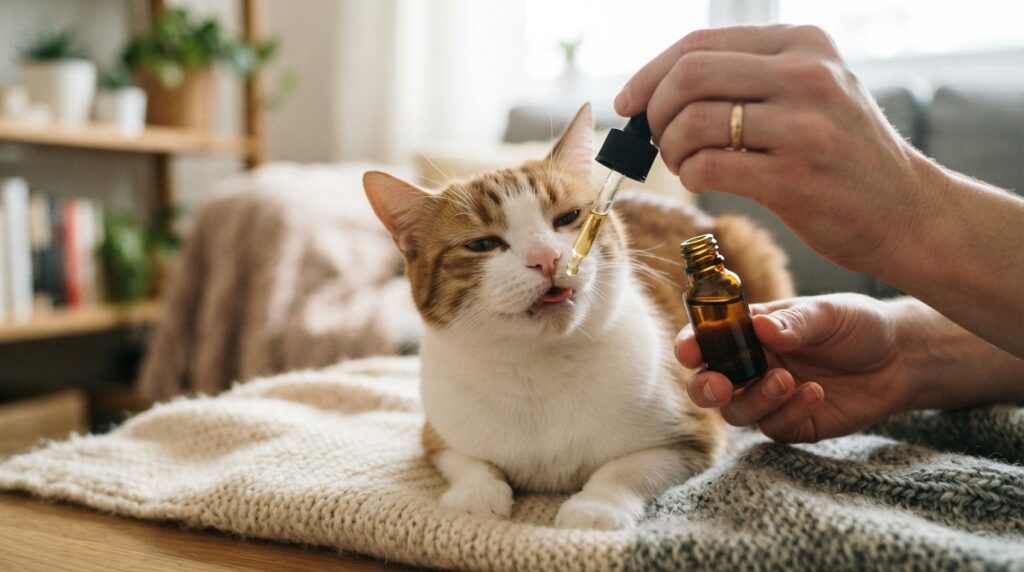
Most owners who consider a supplement make the decision at a kitchen counter or in front of a screen. The vet appointment comes later, if at all. Reversing that order tends to produce better outcomes.
A veterinary visit does not mean permission is being asked for something that is already decided. Raising the topic of CBD oil for cats in an exam room gives the clinician a chance to check the cat’s health, review medications, and suggest approaches with stronger evidence behind them.
This guide lays out why the visit matters, what to bring, which questions are worth asking, and how follow-up works.
Why the Vet Visit Comes First
An Exam Can Change the Answer
A cat that seems a little stiff may have dental pain, kidney disease, an overactive thyroid, or arthritis. Each has a different treatment, and a supplement can hide signs that a vet needs to see clearly.
Older cats are especially prone to overlapping conditions. A physical exam, weight check, and history often reveal more than an owner can see at home.
Bloodwork Gives a Baseline
Many vets suggest a blood panel before starting a new supplement. Liver enzymes such as ALT and ALP, kidney values such as creatinine and BUN, and in older cats a thyroid hormone (T4) test all help establish where the cat stands.
A baseline matters because the body handles cannabinoids through the liver. In a 2018 Cornell study of dogs, alkaline phosphatase rose in some animals on CBD oil, so many clinicians keep an eye on those values.
Honest Disclosure Helps
Vets cannot account for what they do not know. Flea treatments, over-the-counter products, herbal supplements, and food toppers all count as part of the picture.
Owners sometimes worry about judgment. Most clinicians would rather hear about a product the cat is already taking than discover it later through an unexplained lab result.
What to Bring and What to Ask
Bring the Paper Trail
A short folder or a phone album makes the appointment more efficient:
- The bottle or a photo of its label and batch number
- The lab report for that batch
- A list of all medications and supplements, with amounts
- A few notes on appetite, litter box habits, and energy
- Short videos of any movement or behavior that worries you
Videos help because cats often act differently once they reach the clinic.
Questions Worth Asking
A short list keeps the conversation on track:
- Does this cat’s health history make CBD a poor fit?
- Could it interact with current medications?
- What amount, if any, would be reasonable to start with?
- Which bloodwork should be done before and after?
- What signs mean it is time to stop?
- Are there other options with stronger evidence for this problem?
Write the answers down. Memory fades fast in a stressful visit.
What the Vet May Ask Back
Expect questions about why the owner is interested, what symptoms prompted it, how long they have been present, and what has been tried. A clinician may also ask how the oil is stored, who in the household gives it, and whether other pets can reach it.
Those questions are not a quiz. They help the vet match advice to the actual home.
Know the Legal Backdrop
Under federal law, veterinarians face limits on prescribing or dispensing cannabis products, and state rules differ. Some are cautious in how they respond, and some decline to recommend specific products. A useful conversation is still possible. Many vets will discuss risks, monitoring, and alternatives even when they do not endorse a particular bottle.
After the Visit
Set a Follow-Up Plan
If a trial goes ahead, agree on a schedule before leaving. A common structure is a check-in call after a week or two, bloodwork after several weeks, and a repeat exam at the end of the trial period.
Put dates on the calendar so that follow-ups do not slide.
Keep a Daily Log
Entries need only a few lines: date, product and batch, amount, appetite, energy, litter box output, and anything unusual. A pattern of loose stool every third day or a gradual drop in appetite is easy to miss without notes.
Bring the log to every appointment. It gives the vet something solid to read.
Know When to Stop
Stop and call the clinic if the cat vomits repeatedly, becomes unsteady, stops eating, or acts very differently. Bring the bottle with the batch number.
If the trial ends with no clear benefit, stopping is a valid decision. A supplement that does nothing adds cost and risk without a return.
Find a Cat-Friendly Clinic
The AAFP runs a Cat Friendly Practice program that recognizes clinics with feline-focused handling and equipment. Stress at the clinic can affect exam results, so a calm environment helps.
At home, leaving the carrier out as furniture, using synthetic pheromone sprays, and bringing a familiar blanket can lower tension before the trip.
Final Thoughts
A vet visit gives CBD oil for cats a medical context instead of a shopping one. Bloodwork, medication review, and a monitoring plan reduce risk. Owners who arrive with the bottle, the lab report, and a short list of questions get the most from the appointment. Stopping a trial that shows no benefit is a sound outcome.